
How Boiler Repairs Barking Detect Internal Component Wear Before Full Failure
Ever wondered how a faint click inside your boiler turns into a freezing weekend with no hot water? Most full breakdowns start as quiet mechanical wear that hides for weeks. A trained eye catches it long before the unit gives up on you.
According to HSE figures on carbon monoxide awareness, around 7 people die in the UK each year from CO poisoning caused by gas appliances and flues that are not properly installed or maintained. That number drops sharply where annual servicing runs on time.
At Gas Zone, our team reads pressure trends, combustion data, and sensor logs to spot wear early. Boiler Repairs Barking engineers rely on these checks to catch failure before it strikes. Call us today for a same-day visit if any sign here feels familiar.
Why Component Wear Stays Hidden in Boilers Across Barking IG11
Barking sits inside a hard water belt, so limescale coats the heat exchanger quietly for months. The unit keeps firing while internal tolerances drift. By the time the display flashes a lockout, several parts may already be stressed.
Watch for these quiet signals before they snowball:
- You may hear a kettling noise mid-cycle that clears on a reboot.
- Pressure keeps slipping below 1 bar even after you top it up.
- Brief fault codes flash and vanish before you can read them.
- New cold spots show up on radiators after a fresh bleed.
- A faint smell sits near the flue during cold starts.
Book a quick diagnostic with our Barking team before these signs turn into a no-heat morning.
Early Signs Heating Engineers Barking Spot First
Component wear rarely begins with smoke or sparks. It shows up as patterns across visits and seasons. Smart engineers track the trend, not just one fault.
Acoustic Indicators of Pump or Heat Exchanger Stress
- Kettling almost always means limescale on the primary heat exchanger.
- A steady hum or banging usually points to circulator pump wear or trapped sludge.
Pressure Drift and Hidden Leaks
- Pressure below 1 bar without a visible leak hints at a tired expansion vessel.
- Slow seepage near pipework warns of a failing seal or pinhole leak.
Short Cycling, Lockouts, and Flickering Displays
- A boiler lockout every few hours rarely fixes itself with a reset.
- Short cycling wears the gas valve and PCB fast, with codes like F22, F75, EA, or E9.
Call our team if two or more signs show up in the same week, or browse our boiler repairs details.
How Local Boiler Repairs in Barking Diagnose Wear Before Breakdown
A proper diagnostic visit is structured work, not guesswork. It ties the boiler logs to the system around it.
Combustion and Flue Gas Analysis
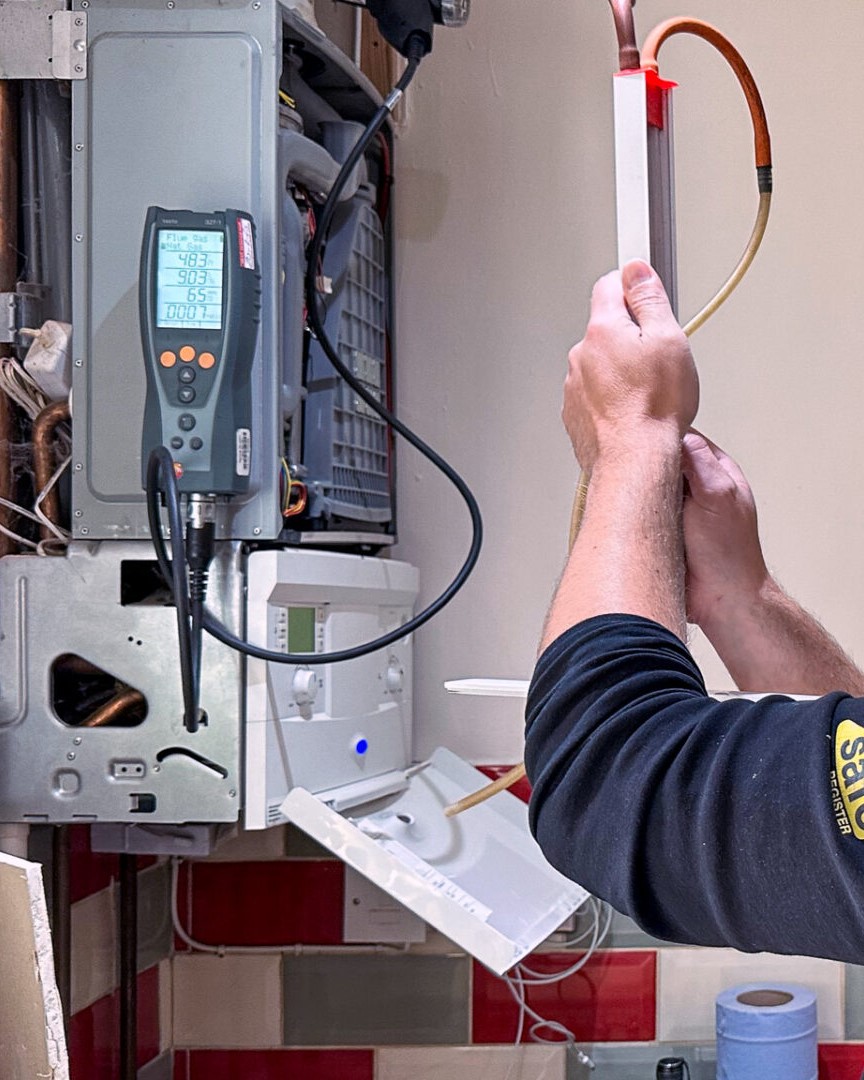
Engineers measure CO, CO2, and O2 at the flue outlet. A drift outside the manufacturer range exposes a worn burner, blocked flue, or weak gas valve.
Sensor, Thermistor, and PCB Diagnostics
- Flow and return thermistor readings tell us whether the diverter valve is sticking.
- Pressure sensor and PCB logs reveal how often the unit has already locked out.
Magnetic Filter, Inhibitor, and Sludge Checks
- Black water in the magnetic filter signals active corrosion across your radiators.
- Low inhibitor levels speed up heat exchanger wear in hard water zones.
Need a clear answer before paying for a new unit? Our local Boiler Repairs in Barking team hands you that in one visit, often paired with power flushing when sludge is the root cause.
Components Most Likely to Wear in Hard Water IG11 Homes
Different parts wear at different speeds inside a Barking property. The local water profile pushes some failures forward by years.
| Component | First Warning Sign | Wear Driver | Engineer Action |
| Heat exchanger | Kettling, hot spots | Limescale, sludge | Power flush, descale |
| Circulator pump | Humming, slow heat | Bearing wear, debris | Clean or swap pump |
| Diverter valve | Hot water only | Mineral stick, motor fade | Free spindle or replace |
| Expansion vessel | Pressure swings | Lost pre-charge | Re-pressurize or replace |
| PCB and sensors | Random lockouts | Heat stress, moisture | Sensor swap, board test |
| Gas valve | Ignition failure | Carbon build-up | Clean or replace |
A short visit from our team can confirm which part sits closest to failure.
Searching for Boiler Service & Repair Near Me? Here Is What Catches Hidden Wear
Many homeowners type “Boiler Service & Repair Near Me” into Google as soon as a fault appears. The right service runs wear checks during every standard visit, not only at breakdown.
A proper inspection from our annual boiler service team covers:
- A flue gas analysis with a digital combustion analyzer, logged on paper.
- Standing and working pressure readings recorded against your last visit.
- A close look at seals, electrodes, and the condensate trap.
- A safety test of devices and a carbon monoxide sweep around the unit.
- Magnetic filter clean and an inhibitor strip reading for system water.
Book a Gas Zone service if your last visit only ticked the basics.
When a Plumber Barking Residents Call Acts Before Full Failure
Timing matters more than tools here. A Plumber Barking households call at the first sign of trouble can save the heat exchanger, the PCB, and a full replacement bill. Wait too long and the wear cascade drags other parts down with it.
Pick up the phone when:
- Boiler pressure drops twice in 7 days with no visible leak.
- Lockouts return within 24 hours of a clean reset.
- New cold spots appear on radiators right after a flush.
- A faint smell of unburnt gas lingers, which calls for gas leak detection right away.
Our Heating Engineers Barking trust for emergency callouts can usually attend the same day across IG11 and Creekmouth.
How Boiler Repairs Barking Engineers Decide Between Repair and Replace
A simple rule helps. If parts and labor for one fix run above 50% of a new unit’s price, replacement makes sense. Below that line, repair almost always wins.
Context still matters. Our Boiler Repairs Barking engineers also weigh:
- Age of the unit, with 10 to 15 years as the typical service life.
- Warranty status and parts availability for older models still on the market.
- Energy efficiency drift, since worn parts can lift gas bills by 10 to 20%.
- Frequency of recent callouts logged on the same boiler.
Ask our team for an honest report. We tell you straight when a fix beats a swap.
Catch the Wear Before It Catches You Off Guard
Boilers rarely fail without warning. The signs sit in the noise, the pressure gauge, and the lockout pattern across a week. The skill is reading them in time.
Trusted Boiler Repairs Barking specialists turn small clues into clear answers, and clear answers into fixes you can budget for. Quick action protects the heat exchanger, the pump, and your weekend plans. Landlords can also see how boiler servicing for Barking landlords keeps tenants safe.
If a recent fault code, a strange noise, or a pressure dip is on your mind, do not wait for a full breakdown. Households across IG11, Creekmouth, and Dagenham book with Gas Zone for fast, Gas Safe registered diagnosis. Contact us today, and let our local team protect your boiler before winter tests it.
Frequently Asked Questions
How often should a boiler be serviced in Barking?
Once a year is the standard for any domestic gas boiler. Hard water and dust in IG11 push wear faster. Skipping a year often voids the warranty.
What does kettling mean on a boiler?
Kettling is the sound of trapped steam inside a scaled or sludgy heat exchanger. Left alone, it can crack the exchanger and force a full replacement.
How do engineers test for internal component wear?
A digital combustion analyzer reads flue gases. A pressure log tracks system trends across a week. A sensor scan checks the PCB for stored fault codes and lockouts.
Why does a boiler keep losing pressure after a top-up?
A tired expansion vessel, a small radiator leak, or a worn pressure relief valve are the usual culprits. A 7-day pressure log shows the pattern.
When should a heat exchanger be replaced instead of repaired?
If the exchanger shows pinhole leaks, deep limescale, or a hairline crack, replacement is the safer route. Repairs on a cracked exchanger rarely hold under pressure.